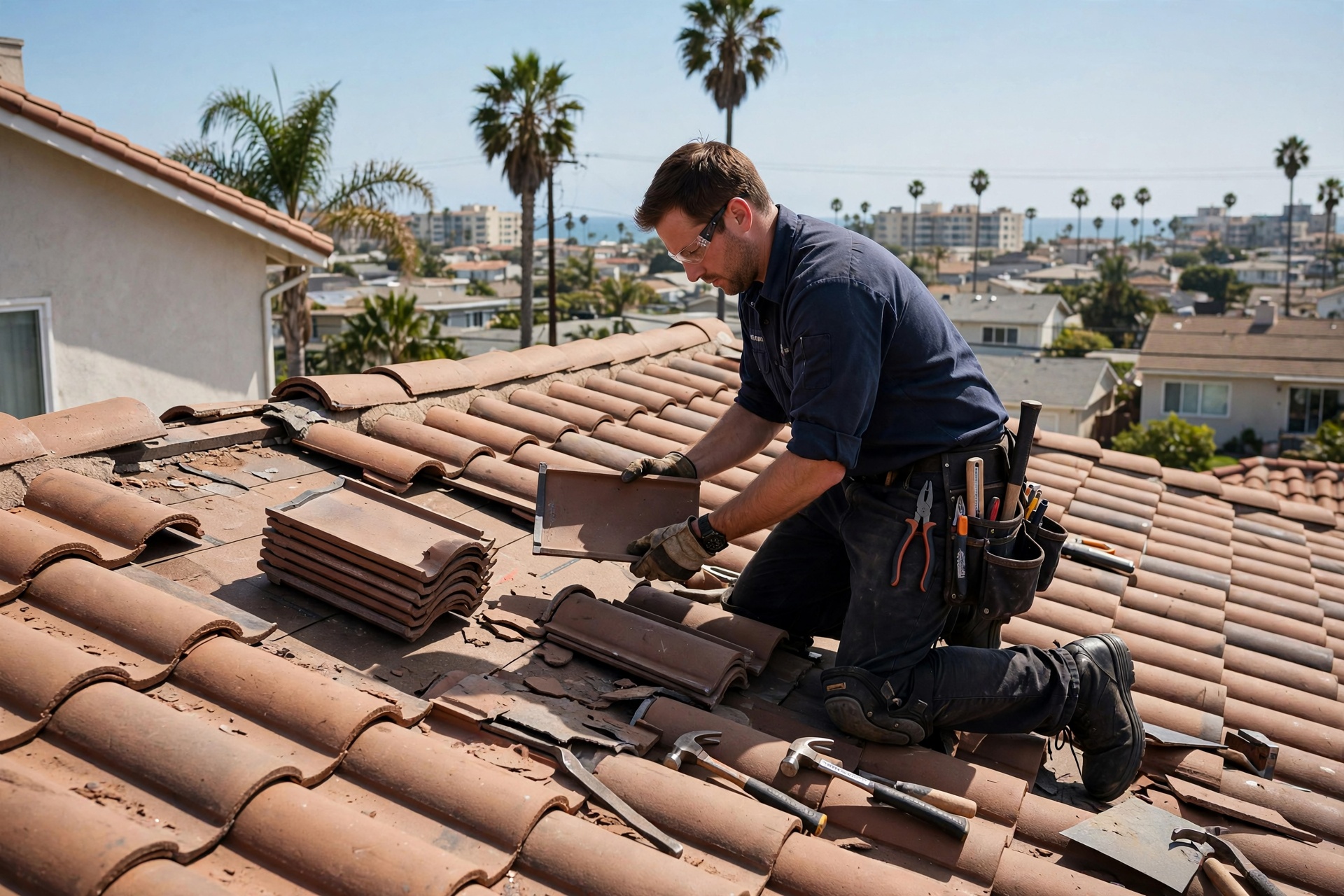
Manhattan Beach homes built decades ago in the Tree Section and near Manhattan Beach Pier often carry original clay tile roofs exposed to constant salt air from the Pacific. Tiles crack from foot traffic during inspections or from high winds that funnel between buildings along The Strand. Underlayment degrades faster here than inland because the mild Mediterranean climate still delivers enough moisture and UV to break down felt layers over time, especially on south-facing slopes.
Repair work in Los Angeles County must account for older roof decks that can show rot once tiles are lifted, particularly on properties close to Manhattan Beach State Beach where irrigation overspray and ocean fog add hidden moisture. Matching replacement tiles requires pulling from the same batch or sourcing compatible profiles because modern tiles differ in thickness and color from those installed thirty years ago. Access remains tight on many lots; crews often work from ladders rather than staging because narrow side yards prevent equipment placement.
Edge cases include tile slippage after minor earthquakes common in the region and flashing failures where tile meets stucco walls in Downtown Manhattan Beach homes. Technicians check for improper prior repairs that used mismatched sealants which trap moisture and accelerate deck damage. Every job starts with a full slope inspection because a single cracked tile near the ridge can mask widespread underlayment failure caused by repeated winter rain events.
Technician insight
In Manhattan Beach the thing that catches most people out with Tile Roof Repair is how fast salt air corrodes the nails holding ridge tiles on homes near The Strand. Homeowners often notice one loose tile after a winter storm but miss the underlayment rot that starts two courses down because the ocean fog keeps the deck damp longer than it would in Redondo Beach or El Segundo.
Tree Section ridge tile failure
Wind during a Pacific storm lifted several ridge tiles on a 1980s home in the Tree Section. Inspection revealed rusted nails and water-stained underlayment extending three feet down the slope. We replaced the underlayment section, re-secured the ridge with stainless fasteners, and matched the original tile profile so the repair blended with the rest of the roof.
Tile Roof Repair Services We Offer
✓Cracked Tile Replacement
Remove and replace individual cracked or broken tiles while preserving surrounding courses on homes near Polliwog Park.
✓Underlayment Repair
Lift tile sections to replace deteriorated felt or synthetic underlayment exposed to ocean moisture in The Strand area.
✓Ridge and Hip Tile Repair
Re-secure or replace loose ridge and hip tiles loosened by Pacific winds common in Manhattan Beach.
✓Valley Flashing Restoration
Repair or replace corroded metal valleys where tile meets tile on older Tree Section roofs.
✓Tile Reattachment After Wind
Re-fasten displaced tiles following coastal storms affecting properties near Manhattan Beach Pier.
Tile Roof Repair Cost in Manhattan Beach, CA
| Service | Typical Range | What Affects It |
|---|---|---|
| Single tile replacement | $75–$150 | Higher when multiple courses must be lifted |
| Underlayment section repair | $400–$900 | Varies by square footage and deck condition |
| Ridge tile re-secure | $250–$500 | Depends on length of ridge affected |
| Valley flashing repair | $350–$750 | Metal type and length determine final cost |
Ranges are typical for Manhattan Beach, CA and confirmed with an exact written quote before any work starts.
How it works
- 1
On-Site Inspection
Walk every slope and check under tiles for deck condition, especially on south exposures facing the ocean.
- 2
Damage Documentation
Photograph cracked tiles, failed underlayment, and flashing issues for the homeowner's review.
- 3
Targeted Repair
Lift only necessary tiles, replace underlayment sections, and reinstall matching tiles with proper fastening.
- 4
Final Walk-Through
Confirm water flow on repaired slopes and verify no new leaks before leaving the site.
Pricing
Pricing depends on number of tiles replaced, underlayment extent, and roof access difficulty.