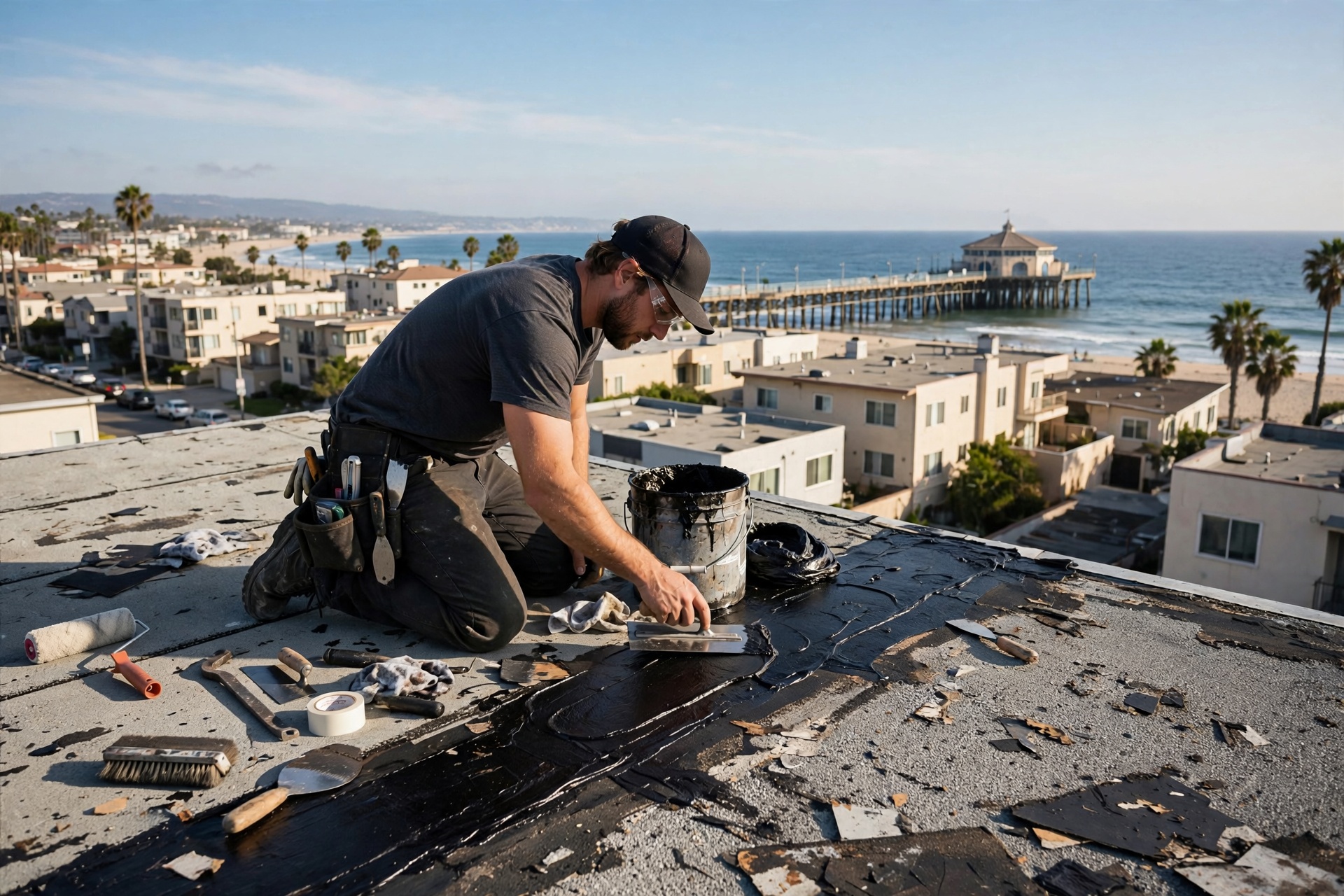
The Strand runs right along the Pacific with homes stacked on narrow lots between the sand and the bike path. Salt spray hits roofs daily and strong onshore winds pick up in the afternoon, so asphalt shingles and tile underlayments take a beating faster than inland blocks. Manhattan Beach Roofing works these blocks by staging materials on the path side and using smaller crews to keep foot traffic moving.
Many homes here date from the 1950s through 1970s with original roof decks that have been patched repeatedly. When winter storms bring heavier rain, flat sections behind parapets often leak first because drainage slopes were never corrected. We focus on re-sloping valleys and replacing corroded flashings at skylights and chimneys that sit low to the ocean horizon.
Access is tight. Deliveries come in via 26th or 27th Street before crews carry bundles down the Strand path. We schedule around the busy weekend bike traffic and the city’s strict noise rules near the beach so work stays quiet after 6 p.m.
Around The Strand
We regularly work near:
- 📍Manhattan Beach Pier
- 📍The Strand promenade
- 📍Manhattan Beach State Beach
- 📍El Porto Beach access path
- 📍26th Street Strand entrance
Roofing in The Strand — Local Notes
- •Ocean salt accelerates corrosion on metal flashings and fasteners, so we use stainless or coated hardware on every The Strand job.
- •Afternoon winds off the water can lift unsecured underlayment, requiring extra perimeter fastening and same-day coverage.
- •Narrow lots mean no room for dumpsters on most properties; debris is bagged and walked out to the street at 26th or Manhattan Avenue.
- •Low-slope sections behind roof parapets collect standing water after heavy rain because original drains were never enlarged.