2026-10-31 ·
How to Spot Early Signs of Roof Leaks in Manhattan Beach Homes
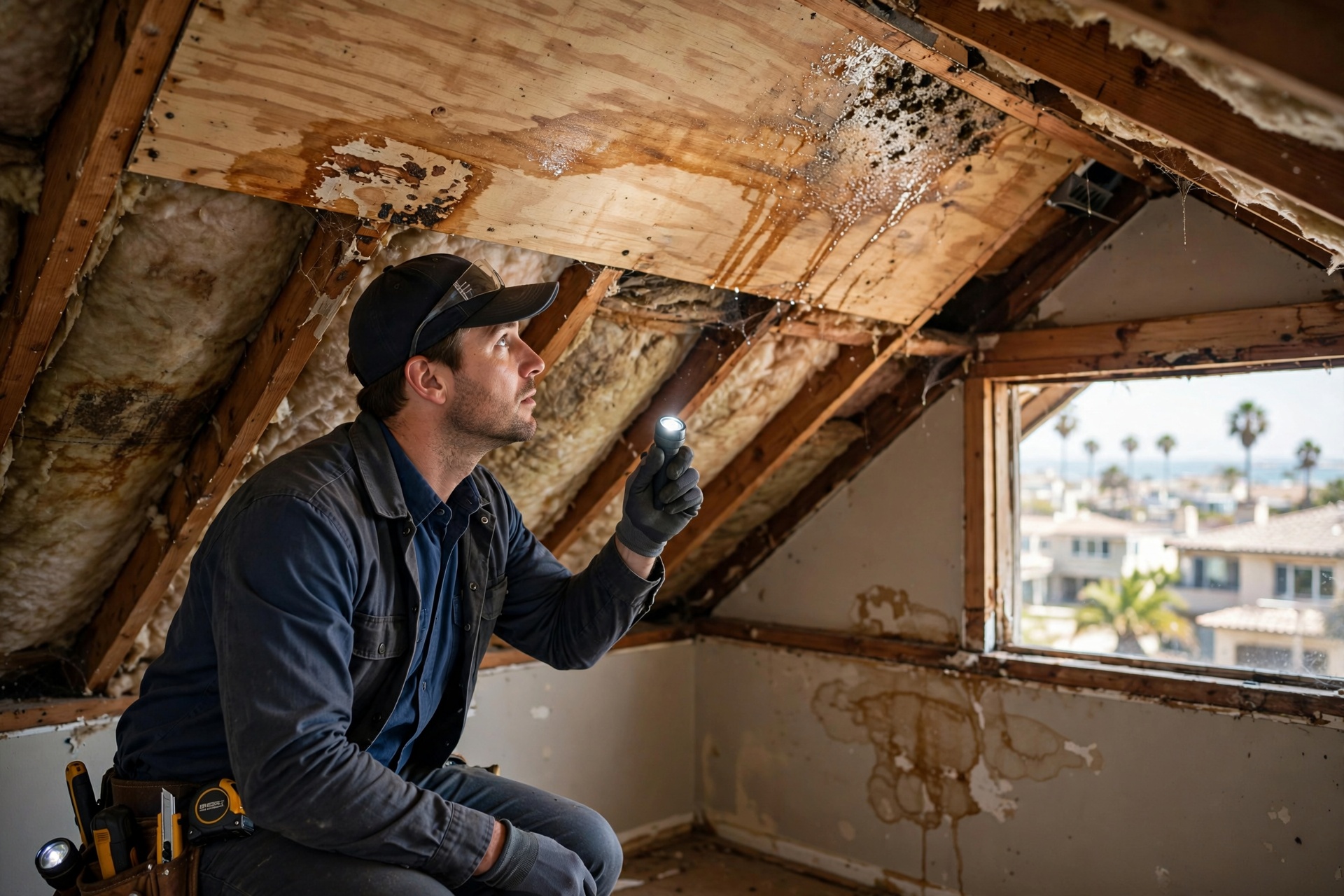
Manhattan Beach homes often reveal roof leaks first through dark water stains on interior ceilings or walls, typically appearing 3 to 6 months after initial penetration in the mild Mediterranean climate moderated by the Pacific Ocean.
Attic Inspection for Moisture Indicators
Homeowners in Downtown Manhattan Beach and the Tree Section should check attics during cooler months when ocean fog increases indoor humidity. Look for dark streaks on rafters, soft insulation patches, or mold growth near roof deck seams. These signs appear more frequently in homes built before 1980 where older underlayment has degraded from repeated salt air exposure. Walk the space with a flashlight to note any daylight coming through nail holes or flashing gaps. Consistent moisture here often traces back to wind-driven rain common along The Strand. Early detection allows targeted fixes before damage reaches living spaces.
Exterior Clues Along Roof Edges and Penetrations
Examine rooflines from ground level or a safe ladder in areas like the Tree Section where mature trees drop debris onto shingles. Check for curled or missing tiles, especially around chimneys and vents exposed to constant Pacific breezes. Rust streaks on metal flashing or granules collecting in gutters signal underlayment wear accelerated by the region's salt-laden air. Walk the perimeter after heavy winter rains to spot wet spots on fascia boards. Homes near Manhattan Beach Pier face additional wind exposure that loosens seals faster than inland properties in nearby El Segundo.
Impact of Local Weather Patterns on Leak Development
The Pacific Ocean keeps temperatures moderate year-round yet delivers concentrated winter rains that test roof integrity in Redondo Beach and Hermosa Beach borders. Salt air corrodes fasteners and underlayment over 8 to 12 years on many Manhattan Beach roofs, creating pinhole leaks that start small. Tree Section properties with steeper pitches shed water differently than flatter sections near Polliwog Park, changing where moisture pools. Monitor after storms for new discoloration because the climate rarely produces prolonged dry spells that would highlight issues naturally. Consistent observation prevents escalation in these ocean-adjacent neighborhoods.
When to Call for Professional Assessment
Contact a local roofer if multiple signs appear together, such as attic moisture paired with exterior granule loss. Manhattan Beach Roofing offers 24/7 Emergency Service Available for urgent cases in The Strand or Downtown Manhattan Beach. Professionals use moisture meters to confirm hidden damage without invasive cuts. For tile-specific concerns common on older stock, review tile roof repair details. Readers facing repeated issues should also read maintaining your roof against salt air exposure near Manhattan Beach shores for seasonal strategies. Prompt evaluation often limits repairs to small sections rather than full replacement.
Preventive Steps Tailored to Manhattan Beach Conditions
Clear gutters quarterly to avoid overflow that backs water under eaves, a frequent problem near Manhattan Beach State Beach. Trim tree branches overhanging roofs in the Tree Section to reduce debris accumulation. Apply sealant to flashing around skylights and vents before the rainy season begins. These steps address the specific salt and wind factors that shorten roof life in Los Angeles County coastal zones. Regular checks help maintain homes without unnecessary interventions.